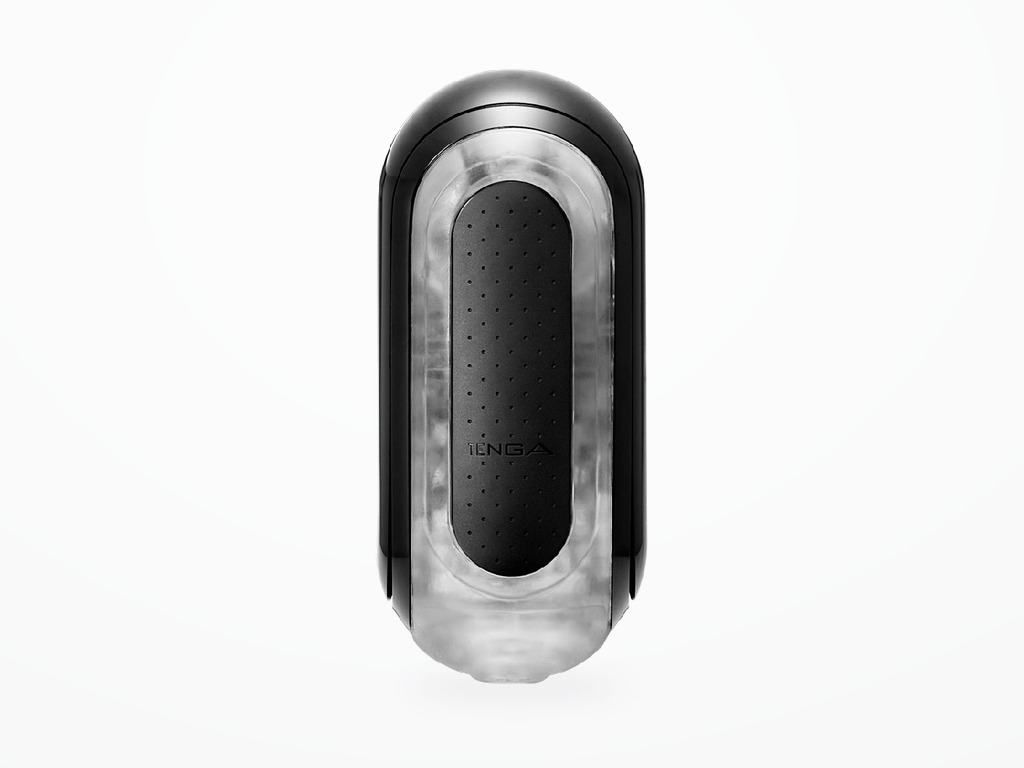
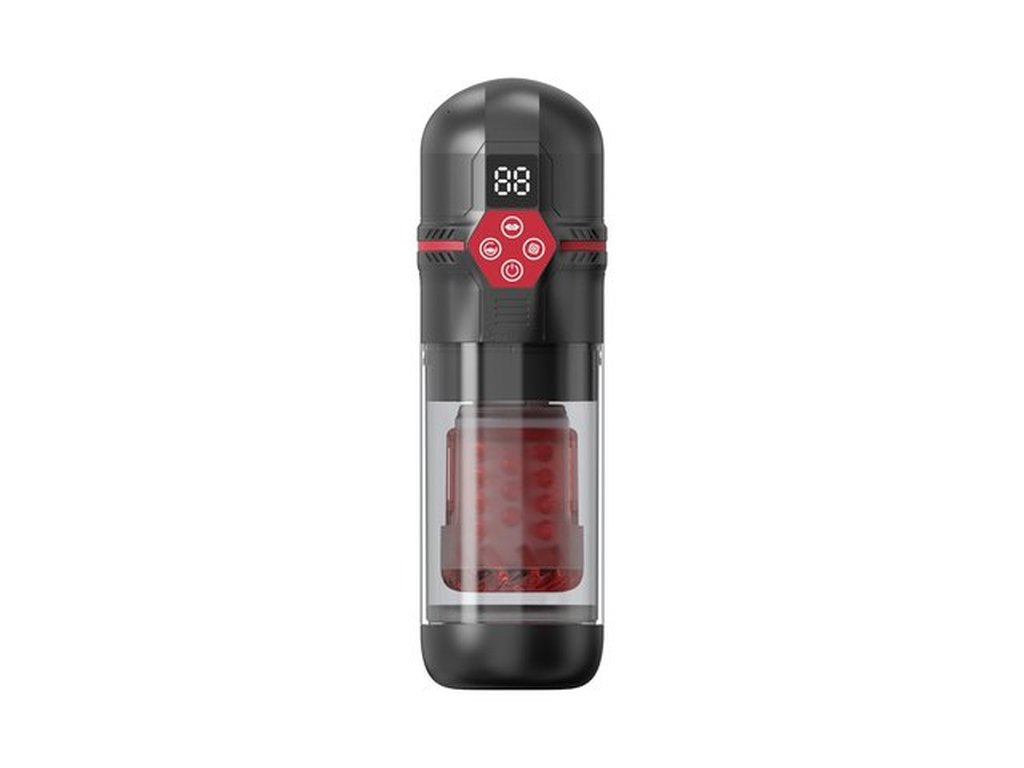
The model under review is the white TFZ-001 from the TENGA US store. The FLIP name also appears on rechargeable products, so a search listing can make this simple mechanism sound considerably more complicated than it is. We compared the manufacturer’s model page, care directions and US price with two powered alternatives. No sample was run on a sound meter or pressure gauge. The published dimensions, operating instructions and package contents give buyers more to work with here than an estimate of what a hand-driven device might sound like.
What the two pads actually do
The standard FLIP ZERO encloses a soft, textured sleeve in a rigid shell. TENGA describes pressing the pads to expel air and change pressure inside. Your fingers can vary that pressure while your arm sets the pace. You can also keep the device still while changing your grip. Those are separate adjustments, even though there are no separate controls marked with numbers. Someone who wants to change direction, pause, or release pressure without finding a button has a reason to prefer this arrangement.
The seal matters to how that adjustment feels. A pad can displace air, but the resulting vacuum also depends on how much air escapes and how far the material flexes. Two people pressing what appears to be the same spot can produce different results. A claim of a single operating pressure would need a defined test insert, a seal and a repeatable squeeze. TENGA supplies none of those conditions or an operating range in kilopascals. Our comparison therefore treats the pads as a way to vary feel, without giving them a pressure rating.
The dimensions that matter in the hand
TENGA lists the housing at 7.09 inches high, 3.15 inches wide and 2.76 inches deep. The unit weighs 17.1 ounces, about 485 grams. The shipping weight is 26.6 ounces. If you are checking whether the product suits a weak grip or small hands, use the lighter of those two figures. Cut a paper rectangle to the listed face dimensions and mark the side edges. It will show where your fingers have to reach around the shell. A flat template cannot tell you how much force the pads need.
The interior is listed separately at 5.9 inches of insertion length and 1.96 inches of insertion width. TENGA presents both as reference measurements. Ridges project into the space, the walls yield, and pressure on the pads changes the shape. Treat the width as a starting point for the fit discussion. If another store quotes a wider figure, check whether it copied the outside width. A difference of more than an inch can come from measuring two perfectly valid but quite different parts of the same product.
Opening the shell is the most useful feature
Cleaning a deeply textured channel through a single opening means relying on feel to find residue. Here the shell opens lengthwise and exposes both sides of the liner. Remove the slide arms, press the side clasps, then open the shell. TENGA specifically cautions against forcing the clasps apart. The locks hold the case closed when the pressure pads are squeezed. Levering the two sides apart with the locks still engaged puts strain on the parts that keep the edges aligned.
The US product page specifies running cold or tepid water. Look at the folds near the opening, along the hinge side and where the deepest patterns meet. Changing the angle to the light helps reveal water collecting at the bottom of a pocket. There is no reason to remove the soft material from its housing to gain that view. Buyers who find an enclosed channel awkward to inspect may value this design more than they would an extra motor setting. It makes the wash step visible every time they use it.
The drying stand and the space it needs
The slide arms serve a second purpose after washing. TENGA instructs owners to lay them flat and place the partially opened device into their slots. The stand separates the wet surfaces and gives air access from above. That arrangement is convenient in a bathroom where a partly opened sleeve can remain out. In a room shared with other people, the need to leave it undisturbed may matter more than the relatively tidy shape of the closed shell.
Consider the whole storage routine before buying. Choose a level spot, leave room for the opened halves and establish where the loose arms will go while you rinse the sleeve. To compare drying fairly, note when you finish rinsing, then inspect the deepest recesses at regular intervals. Record the first check when those areas and the meeting edges are dry. A timer stopped as soon as the water is turned off measures hands-on cleaning only. Airflow, room temperature and the angle of the stand all affect when the shell is ready to close.
Materials and the limits of a softness rating
The material list is unusually specific about which part uses which polymer. TENGA assigns thermoplastic elastomer to the inner sleeve, silicone to the pressure pads and transport anchor ring, and polycarbonate to the case and slide cap. A listing that describes the whole item as silicone gives the wrong impression about its contact surface. The distinction matters when you are choosing a lubricant or trying to replace a worn component. TENGA’s instructions specify its own lotion or a water-based lubricant.
A Shore A number describes indentation hardness under a defined procedure. A thin ridge backed by a hollow channel can fold over long before the bulk material feels compressed. Even a reliable value for a flat sample would tell you little about that ridge in isolation; the spacing and wall thickness also affect it. A sensible bench review would first map the positions and shapes that can flex, then seek a manufacturer-supplied test coupon before quoting a hardness figure. The source lists TPE and omits the durometer value, which is what the table records.
What powered alternatives add for the price
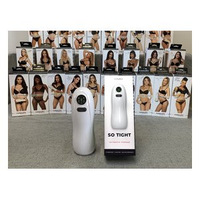
So Tight combines four suction settings with nine vibration patterns. Its separate buttons let the user select those functions independently. The published price is $107.99. At TENGA’s US regular price of $109.99, the difference is only $2. At the $93.49 promotional price we found on TENGA’s store, the manual product costs $14.50 less. Those two comparisons can reasonably lead to different purchases. Check the current price against the mechanism you want, especially when a retailer is advertising a percentage discount against a different reference price.
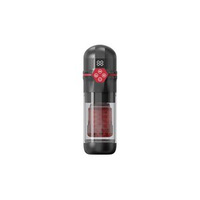
FireStorm AI is $155 and provides seven selections each for thrust rotation, vibration and suction. Cosara lists up to 60 minutes of use and a 240-minute USB-C charge. So Tight lists one hour of use after 130 minutes of charging. The TENGA has no charge schedule. The practical question for frequent travel is whether you want to pack a cable or leave a manual sleeve open to dry before repacking. Both powered products also require cleaning and drying, so a charging comparison alone understates the space and time involved.
A fair way to compare sound and movement
A standard FLIP ZERO has no motor whine. Movement can still create noise as air passes through the opening and the sleeve rubs against a surface. To compare that with a powered unit, use the same room and place an A-weighted sound meter 30 cm from the nearest part of each housing. Measure the background first. Support each device in the same way, since a hard tabletop can radiate more sound than a hand or padded holder. Keep the meter’s angle and the room arrangement consistent across runs.
For the manual device, select a reproducible movement rate with a metronome on a visual setting so the ticks stay out of the recording. Record the rate, the insert geometry, amount of water-based lubricant and whether the pads were being squeezed. For the powered models, identify the exact mode and take separate readings for functions that can run independently. Cosara lists figures below 45 decibels for So Tight and below 60 for FireStorm AI. Neither listing specifies a 30 cm measurement with those conditions. We therefore cannot use these figures to rank the three products by measured loudness.
Model names worth checking before checkout
The TFZ-001 is the manual FLIP ZERO described here. TENGA separately sells a FLIP ZERO Electronic Vibrotation with product code TFZ-103R. Its US listing describes two vibration motors and a gyro sensor that lets movement of the housing control the rotation. Those details stay with the electronic model. If you see charging details, rotating parts or five vibration patterns attached to a listing for the white manual unit, the store may be combining descriptions or showing another variant in a selector.
Look for the code on the selected variant, then compare it with the product manual. This is particularly useful on secondhand or clearance listings, where a photo can show a family of visually similar devices. Check that the slide arms are present. They lock the manual case and form its drying stand, so a missing pair affects more than appearance. If the listing shows only the closed shell, a photo of the open case and the separate arms answers more of these questions than a generic photograph of the packaging.
Buyer questions
Does the standard TENGA FLIP ZERO require charging?
The white TFZ-001 works entirely by hand. Your arm supplies the movement and the two pads let air out to adjust the pressure. A retailer offering a rechargeable FLIP may be showing a different model. Match the product code before comparing battery life, price or the contents of the box.
Is the entire sleeve made of silicone?
The inner sleeve is TPE. The pressure pads and anchor ring use silicone, while the case and slide cap use polycarbonate. The maker supplies no Shore A hardness figure for the liner. Use the material-specific instructions and the water-based lubricant TENGA specifies for this model.
How long does the FLIP ZERO take to clean?
TENGA gives a method and leaves the duration open. Remove the arms, release the clasps, rinse the exposed sleeve and set the partially open case on its stand. If clean-up time is a buying priority, compare active washing and subsequent air-drying as two separate parts of ownership.
Which Cosara model makes sense if manual movement is tiring?
FireStorm AI has the wider set of powered functions and costs $155. So Tight offers four suction settings and nine vibration patterns for $107.99. Choose the latter if those functions cover your needs. Neither device has a published force-versus-load curve that would quantify how a particular setting feels.
Can I compare TENGA’s 5.9-inch figure with So Tight’s 9.08 inches?
They describe different dimensions. TENGA’s 5.9 inches is the stated interior insertion length. Cosara’s 9.08 inches appears in So Tight’s overall dimensions. For storage, compare external measurements across both devices. For internal fit, ask for the usable channel length on the exact model you plan to buy.